As an Amazon Associate we earn from qualifying purchases. This does not change your price.
Cat flap finder: 4 questions, about 1 minute
- Where will the flap go: a solid uPVC or timber door panel, a composite door, glass (single or double glazed), a sliding patio door or a wall?Tap the lower panel. A flat infill panel in a uPVC door is easy to cut or swap. Glass that is toughened or double glazed cannot be cut in place, so you need a new sealed unit with the hole made at the factory. A composite door has a solid core, and cutting it usually voids the door warranty.
- How thick is the panel, glass or wall?Measure the panel at its edge, or the glass at the bead, using a steel rule. For walls, measure through an open window or at the reveal. Compare the figure with the self-lining depth or tunnel depth in the table. For walls, work out how many tunnel extenders or wall liners you need.
- How big is your cat?Measure across the widest part of the shoulders and the height from the floor to the belly. Standard microchip flaps suit small to average cats. Large or broad cats, such as many Maine Coons, Ragdolls and Norwegian Forest cats, usually need a pet-door size with an opening of about 170 to 195 mm. Go
- Do you need microchip entry, and does the door contain metal?Look for a steel reinforcement bar in the uPVC frame, a metal skin or an aluminium spacer in the glass. Metal can stop the microchip reader working properly. Metal doors need a mounting adaptor and sometimes a bigger hole. In double glazing, ask the glazier for a non-metallic spacer around the hole.
Quick reference
| Model | Flap opening (W x H) | Door/wall cut-out (W x H) | Glass hole (diameter) | Thickness without extras | For thicker walls |
|---|---|---|---|---|---|
| SureFlap Microchip Cat Flap (also Connect, DualScan) | 142 x 120 mm | 165 x 171 mm | 212 mm (accepts up to 260 mm with Cat Flap Mounting Adaptor) | 70 mm tunnel | Cat Flap Tunnel Extender, +50 mm each, stackable |
| SureFlap Microchip Pet Door (also Connect) | 178 x 170 mm | 207 x 234 mm | Approx. 294-320 mm with Pet Door Mounting Adaptor | 70 mm tunnel | Pet Door Tunnel Extender, +50 mm each |
| Cat Mate Elite Microchip Cat Flap with Timer (355) | 145 x 145 mm | 178 x 204 mm | 232 mm | Self-lining to 100 mm | Elite Wall Liner (308), 1 per 50 mm over 100 mm |
| Cat Mate Microchip Cat Flap (360) | 145 x 145 mm | 173 x 198 mm | Check manual | Self-lining to about 85 mm | Elite Wall Liner (308) |
| PetSafe Microchip Cat Flap | Approx. 145 x 135 mm | 168 x 175 mm | With installation adaptor. Retailers quote 215 mm for single glazing and 260 to | 72 mm tunnel | PetSafe tunnel extensions plus installation adaptor |
| Pet-Tek Maxi Dual Glaze (G-SDDC / G-SDDW) | 185 x 195 mm | Glass only | 267 mm | Glass 3-28 mm | Not for walls |
| Cat Mate Glass Fitting Cat Flap (210) | Check pack | Also thin panels | 223 mm | Up to 30 mm | Not for walls |
Our picks
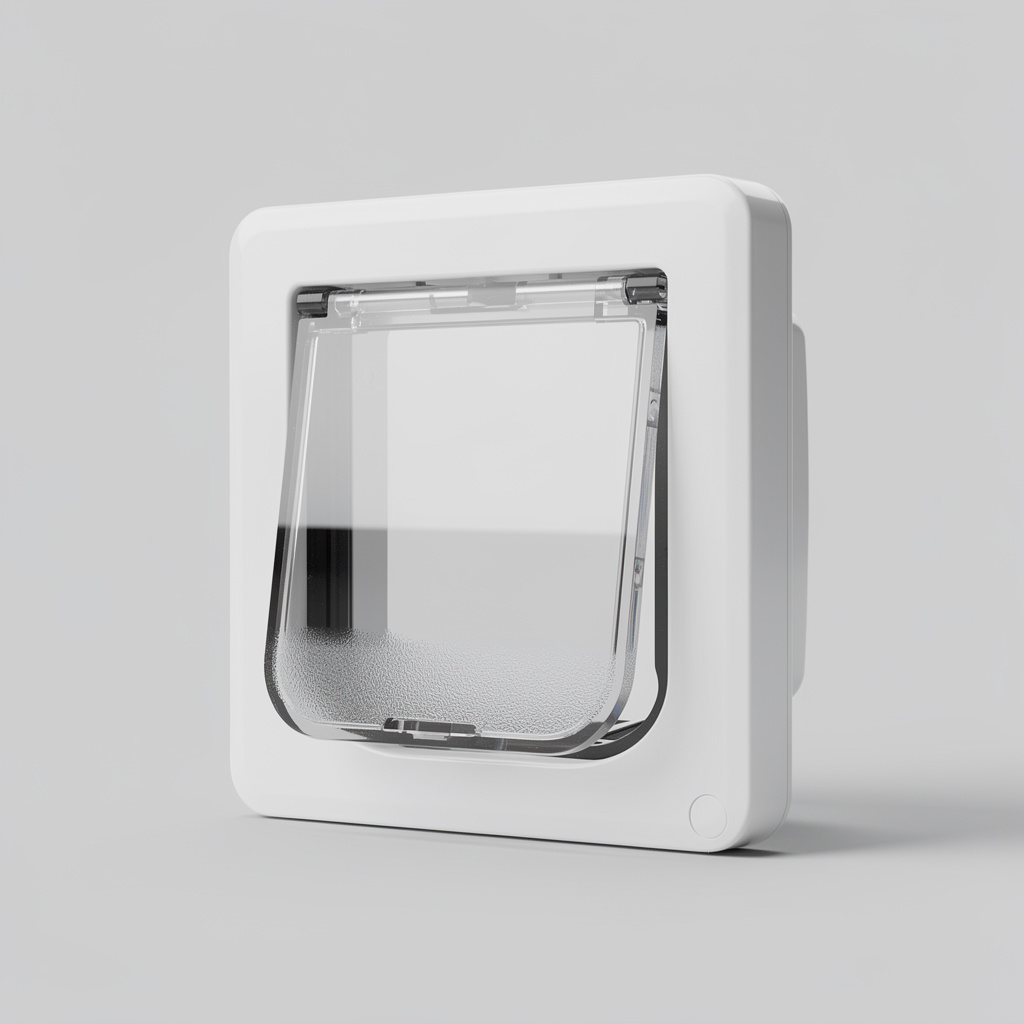
SureFlap Microchip Cat Flap
Reads your cat's existing microchip, and the 165 x 171 mm cut-out is widely used. Fits glass holes from 212 to 260 mm with the separate mounting adaptor.
View on AmazonAd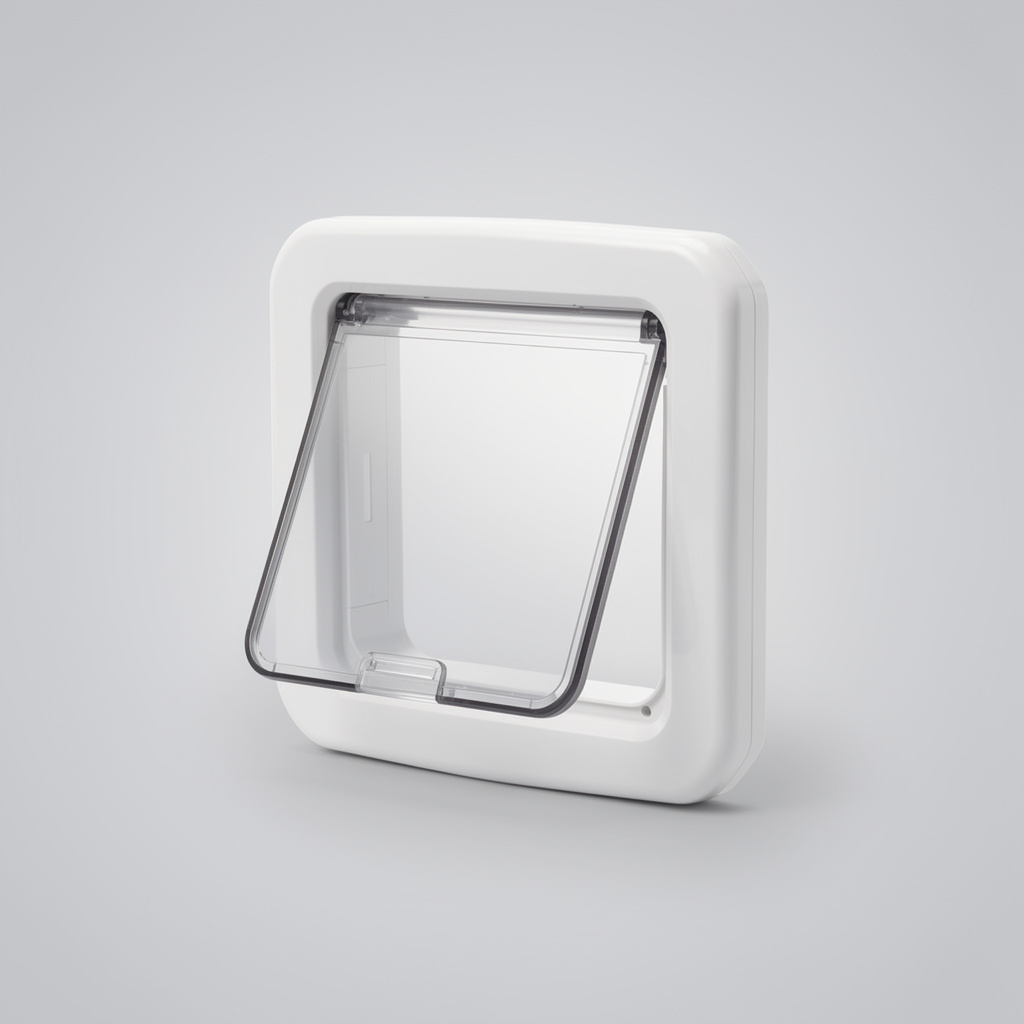
SureFlap Microchip Pet Door
Its 178 x 170 mm opening is much bigger than the standard SureFlap. It also has a curfew mode. It needs a bigger cut-out (207 x 234 mm) and its own mounting adaptor for glass.
View on AmazonAd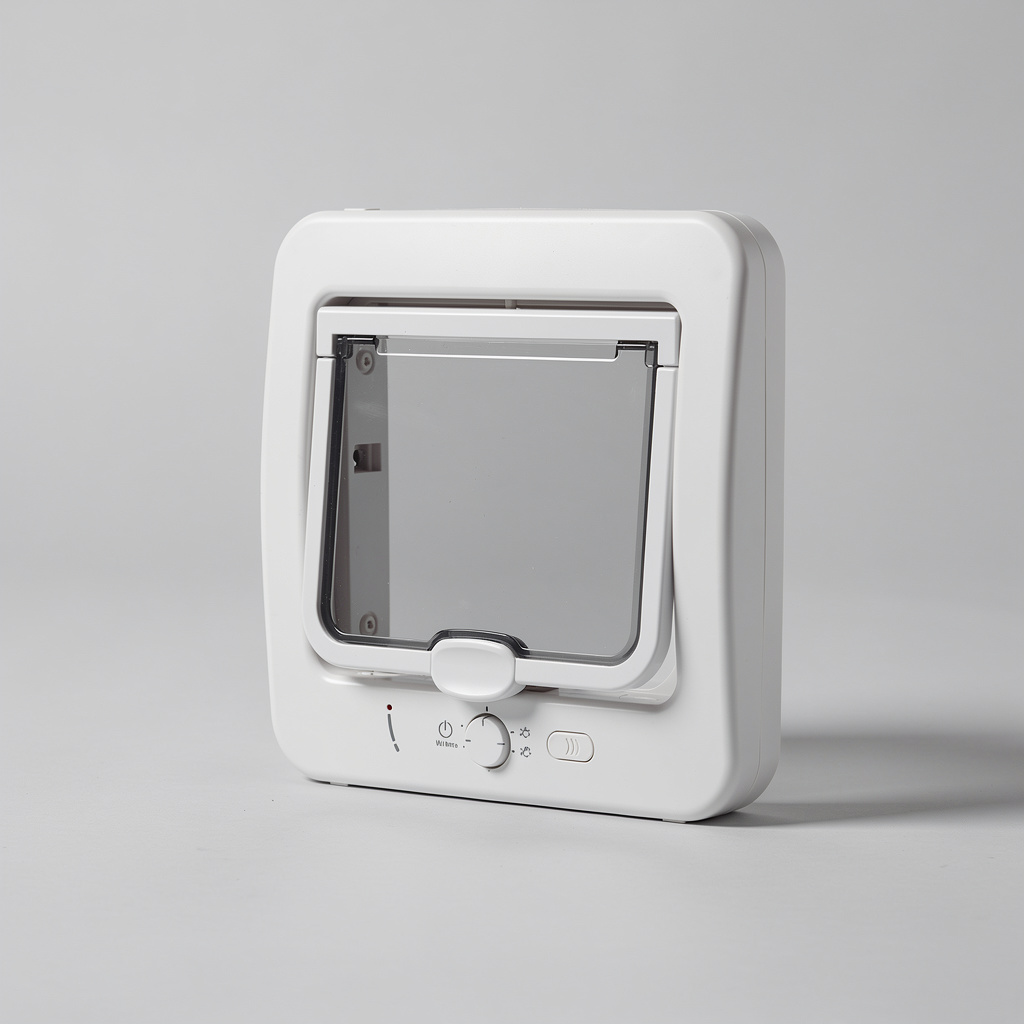
Cat Mate Elite Microchip Cat Flap with Timer Control 355W
Self-lines to 100 mm, so it often needs no extra tunnel in thick doors. For walls, add one Elite Wall Liner per 50 mm.
View on AmazonAdPetSafe Microchip Cat Flap
Stores up to 40 cats. It has a 72 mm tunnel. Glass, metal doors and walls need the PetSafe installation adaptor.
View on AmazonAdPet-Tek Catwalk Maxi Dual Glaze Glass Fitting Pet Door (G-SDDC)
It fits glass 3 to 28 mm thick and needs a 267 mm hole. It sticks out only a little, so it can suit sliding doors if there is enough clearance.
View on AmazonAdCat Mate 210 Glass Fitting Cat Flap
Slim round frame for panels up to 30 mm, needing a 223 mm hole. It has a manual 4-way lock and no microchip.
View on AmazonAdSureFlap Cat Flap Tunnel Extender
Each extender adds 50 mm to the 70 mm tunnel, and you can stack them. The Pet Door has its own extender.
View on AmazonAdSureFlap Cat Flap Mounting Adaptor
Two-part ring for round holes from 212 to 260 mm. It does not fit the Pet Door, which needs the Pet Door Mounting Adaptor.
View on AmazonAdCommon buying mistakes
- Ordering a flap for existing double glazing and expecting to cut it in place. Order the flap first, then have the glazier make a new unit with the right hole size for that model.
- Assuming all cut-outs are the same. SureFlap needs 165 x 171 mm, Cat Mate Elite 178 x 204 mm and the SureFlap Pet Door 207 x 234 mm. If you replace an old flap, compare the new cut-out with the existing hole, or use a mounting adaptor to cover it.
- Buying the SureFlap Cat Flap Mounting Adaptor for the Pet Door. The Pet Door has its own, bigger adaptor.
- Buying a standard 142 mm flap for a large cat. Measure shoulder width and pick a pet-door size if your cat is near or over 140 to 150 mm.
- Cutting a composite door without checking the warranty and the core. Ask the door maker first or choose another spot.
- Fitting a microchip flap near steel reinforcement or with a metal glass spacer. Check for metal and use the adaptor or a non-metallic spacer.
Good to know
Can you put a cat flap in double glazing or a glass door?
Yes, but not by cutting the glass you already have. Toughened glass and sealed double-glazed units cannot be cut in place. A glazier measures the unit, orders a replacement with a round hole cut before toughening, and swaps it in. Choose the exact flap and adaptor first, because the hole size depends on the model: 212 mm for the SureFlap cat flap, 232 mm for the Cat Mate Elite and 267 mm for the Pet-Tek Maxi Dual Glaze. Ask the glazier to use a non-metallic spacer around the hole if you are fitting a microchip flap.
How high should the hole be in the glass?
SureFlap's fitting guide says to measure from the floor to your cat's belly and add 56 mm. That gives the centre of the glass hole. The centre should also be at least 200 mm above the bottom of the frame so the mounting adaptor fits.
Can I fit a cat flap in a uPVC door?
Usually yes, if the door has a flat lower infill panel. Fitters cut the panel and keep clear of the steel reinforcement and the locking gear. If the panel is moulded, decorative or too thin to clamp the tunnel, they fit a new reinforced uPVC panel cut for the flap. You can move that panel to another door later.
What about a composite door?
Composite doors have a timber or foam core inside a GRP skin, sometimes with metal reinforcement. You can cut one, but water can get into the core, the door loses some energy efficiency, and most UK door makers will no longer honour the warranty. To remove the flap later, you need a new door or an overboard. Fitting it in a uPVC side door, a panel or the glass is often better.
Can you fit a cat flap in a sliding patio door?
Yes. You need a slim glass-fitting flap in a new glass unit, and the frame must clear the other sliding panel. The Pet-Tek Maxi Dual Glaze sticks out 17 mm inside and 11 mm outside. Measure the gap between the panels before you order. Replacing a large patio unit costs more than a door panel.
How many tunnel extenders do I need for a wall?
Measure the full wall thickness and take off the flap's own tunnel depth (70 mm for SureFlap). Divide the rest by 50 mm and round up. Many fitters add one more so the cat has a small step outside. For a Cat Mate Elite, you need one wall liner for every 50 mm of wall over 100 mm. Cavity walls usually need a builder, and the cavity has to be lined.
Which cat flap is big enough for a Maine Coon or Ragdoll?
Breed is only a rough guide. Measure the shoulders. Sure Petcare designed its Microchip Pet Door, with a 178 x 170 mm opening, for large cats such as Maine Coons and says shoulders should ideally be no wider than 170 mm. For glass, the Pet-Tek Maxi Dual Glaze has a 185 x 195 mm opening. Standard microchip flaps with openings around 142 to 145 mm are designed for small to average cats.
Why is my microchip flap not reading the chip in a metal door?
A metal skin, a steel bar in uPVC or a metal spacer in double glazing can interfere with the reader coil. SureFlap and PetSafe both need a mounting adaptor for metal doors, and the hole may need to be larger so the metal is further from the reader. Find any reinforcement before you mark the cut-out.
FAQ
What size hole do I need for a SureFlap microchip cat flap?
165 x 171 mm in a door or wall. In glass you need a round hole of 212 mm, or up to 260 mm with the Cat Flap Mounting Adaptor.
What size hole does a Cat Mate Elite microchip flap need?
178 x 204 mm in a door, or a 232 mm round hole in glass. It self-lines to 100 mm.
Can I cut a hole in my existing glass myself?
No. Toughened and double-glazed glass cannot be cut in place. A glazier has to supply a new unit with the hole already made.
Do I need an adaptor to fit a microchip flap in a wall?
The SureFlap Microchip Cat Flap and Pet Door have screw holes for wall fixing, so you only need tunnel extenders. PetSafe needs its installation adaptor for walls, glass and metal doors.
Will a microchip flap work with my cat's chip?
The main brands read common ID microchips and their own collar tags. PetSafe lists FDX-B 15-digit chips. Check the chip type with your vet if you are unsure.
Do you earn money from this page?
Yes. If you buy through our Amazon links, we get a commission. It does not change the price you pay or the sizes we list.
More guides
Sources
- Sure Petcare: Microchip Cat Flap support and dimensions
- Sure Petcare: Product accessories (tunnel extenders, mounting adaptors)
- Sure Petcare: Cat Flap Mounting Adaptor
- SureFlap Microchip Cat Flap user manual: fitting in glass
- Identipet: SureFlap Microchip Pet Door dimensions
- Closer Pets: Cat Mate Elite Microchip Cat Flap 355W
- Cat Mate Elite instructions (wall liners, glass)
- Closer Pets: Microchip Cat Flap 360
